
Letter to your future self: how to write it and when to open it
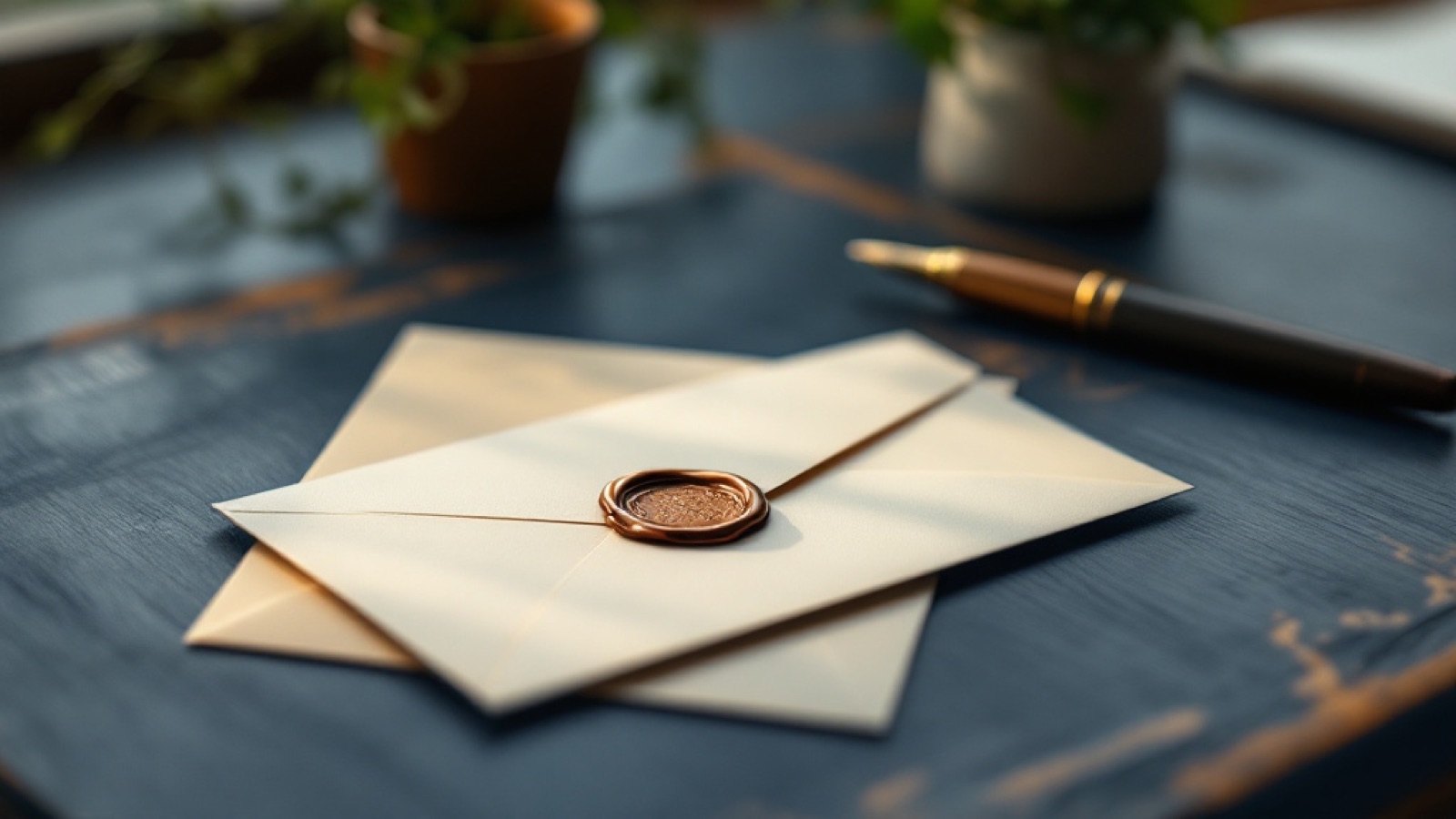
A letter to your future self is a note you write today and open one, five or ten years from now, describing who you are, what worries you, what you hope for and what you want to ask the person you are becoming. Write it in one sitting, pick a specific opening date, and decide right now how it will reach you, because delivery is where most of these letters get lost.
Why write to your future self at all
In a 2011 review in the Annals of the New York Academy of Sciences, psychologist Hal Hershfield pulled together research suggesting that many people think about their future self almost the way they think about a stranger. People feel more connected to who they will be in five years than to who they will be in forty, the review notes, and when the future self feels similar, vivid and positive, people make more choices today that pay off later.
A letter is a cheap, low-tech way to make that stranger more real. Researchers have tested it:
- Ethical choices. In a 2013 Psychological Science study, Jean-Louis van Gelder, Hal Hershfield and Loran Nordgren had online participants write to themselves 20 years ahead, while a comparison group wrote to themselves three months ahead. According to Northwestern's Kellogg School of Management, the 20-year writers were less inclined to pick the dishonest option in hypothetical dilemmas, such as buying laptops that were probably stolen.
- Exercise. Rutchick and colleagues (Journal of Experimental Psychology: Applied, 2018) randomly assigned people to write to themselves three months or 20 years ahead. People whose 20-year letter strengthened their sense of continuity with their future self exercised more in the days that followed.
- Mood. In April 2020, Yuta Chishima, I-Ting Huai-Ching Liu and Anne Wilson asked 738 adults in Japan to write a short letter to themselves one year ahead, or a letter from that future self back to the present (Applied Psychology: Health and Well-Being, 2021). Both letter groups ended the session with less negative and more positive emotion than a control group that only described their daily life.
- Planning. Chishima and Wilson also worked with students at a vocational high school in Japan. Writing on the Society for Personality and Social Psychology's blog, they report that students who exchanged two letters (one to their future self, plus a reply from it) showed more career planning and more willingness to study at a follow-up weeks later. A single letter did not produce that change.
What the studies do not show
The effects are modest and were mostly measured soon after writing. In the Chishima, Liu and Wilson study, the drop in negative emotion was moderate in size (Cohen's d of 0.44 and 0.47), measured at the end of the session, and the authors say they do not know how long it lasts. The van Gelder study measured choices in imagined scenarios, not real behavior. None of these studies followed people to the day they opened the letter. Treat it as a perspective exercise, not a treatment. Writing to other people, such as a gratitude letter, has its own body of research, covered in what research says about writing to the people you love.
What to write: prompts for each section
Write the way you would write to a close friend you have not seen in years. Put today's date at the top.
Who you are now
- Where you live, who you live with, what you do all day.
- One ordinary day this week in small details: breakfast, the song stuck in your head, what made you laugh.
- Things you take for granted that may be gone by the time you read this.
What worries you
- The worry taking up the most room in your head right now.
- How you think it will turn out. Reading your own prediction later is one of the best parts.
What you hope for
- Three things you would like to be true by then.
- The kind of person you want to be, not only what you want to have.
Questions for your future self
- Are you still close to the people who matter to me now?
- Was the decision I am making this month worth it?
- What would you tell me, the person writing this?
One promise
Just one, specific, and within your control. "I will call my mom every Sunday" can be checked. "I will be happier" cannot.
Worth trying: when you finish, write the reply from your future self too. In Chishima and Wilson's work, the two-letter exchange was the version linked to more planning weeks later.
How far ahead: 1, 5 or 10 years
One year is easy to picture. Chishima, Liu and Wilson chose it partly because, as they explain in their paper, 20 years may be too distant to form a vivid image. Good for concrete goals or for looking back on a hard season. The downside: not much changes, so the letter can feel obvious.
Five years is the middle ground. Enough time for a new job, a move or a new family member, while your questions still make sense when it arrives.
Ten years or more turns the letter into a record of how you thought and what you cared about. The van Gelder and Rutchick studies used 20 years and still found effects on present-day choices. The catch is practical: the longer the wait, the more likely the inbox or the envelope is gone.
Can't choose? Write two: one for next year, one for ten years out.
How to make sure it actually reaches you
- Email addresses change. Work and school addresses vanish when you leave. Use a personal address you expect to keep.
- Accounts close. A cloud doc or a notes app only works if you can still log in. An account you have not touched in years may be locked or closed.
- Paper gets lost. Moves swallow envelopes. Seal it with the opening date on the outside, keep it in one fixed spot, and tell someone you trust that it exists.
Either way, set a calendar reminder with the date and where the letter is.
When the day comes
- Read it somewhere quiet, not between meetings.
- Go easy on the person who wrote it. They knew less than you do now.
- Check the promise. Kept or not, ask what you learned.
- Write back a few lines to your past self.
- If it brings up something painful, like someone who is no longer here, give yourself time and talk it through with someone close.
- Then write the next one.
A version to write with your child, to open at 18
- Young kids: ask questions and write down their answers word for word. Favorite food, best friend, what scares them, what they want to be, how they picture themselves at 18.
- Teenagers: offer, do not insist. Hand them the prompts above and respect their privacy: they write alone and seal it themselves.
- Add your part: a few lines about who you see in them today and what you hope for them.
- Write their 18th birthday on the envelope and store it somewhere you both know.
Keep it light. The letter is not a contract, and if they want something completely different at 18, that is the point of reading it. If you would rather write your own letter for them to read years from now, see how to write a legacy letter to your children.
Have it arrive on the date you choose
If you would rather not rely on your memory or a drawer, Rememver can deliver it for you. Record a private video message and choose when it arrives: on a date you pick, or after your passing, once the people you trust confirm it. For a letter to your future self, the first option is all you need: put your own email address as the recipient, pick the date, record a video and write your letter in the message. On that day you get an email with a link and a 12-character code, and you don't need an account to view it.
Sources
- Future self-continuity: how conceptions of the future self transform intertemporal choice, Annals of the New York Academy of Sciences (Hershfield, 2011), via PubMed Central
- Vividness of the future self predicts delinquency, Psychological Science (van Gelder, Hershfield and Nordgren, 2013)
- For long-range thinking, imagine the future self, Kellogg Insight, Kellogg School of Management, Northwestern University
- Future self-continuity is associated with improved health and increases exercise behavior, Journal of Experimental Psychology: Applied (Rutchick et al., 2018), via PubMed
- Temporal distancing during the COVID-19 pandemic: Letter writing with future self can mitigate negative affect, Applied Psychology: Health and Well-Being (Chishima, Liu and Wilson, 2021), via PubMed Central
- What would your future self tell you?, Society for Personality and Social Psychology, Character & Context blog (Chishima and Wilson)
Frequently asked questions
What should I write in a letter to my future self?
Most good letters to your future self cover five things: who you are right now, with small details from an ordinary day; what you are worried about and how you think it will turn out; what you hope will be true by then; questions only your future self can answer; and one concrete promise that depends on you. Date it at the top. It does not need to be long, only honest.
How many years ahead should I write a letter to my future self?
One year is easy to imagine and works for specific goals. Five years leaves room for big changes in work, home or family while your questions still make sense. Ten years or more turns the letter into a portrait of who you were, but raises the odds that the email account or the paper is gone by then. If you cannot decide, write two letters: one for next year and one for ten years out.
Does writing a letter to your future self actually do anything?
There is modest evidence. In a 2021 study by Chishima, Liu and Wilson with 738 adults in Japan, those who wrote to themselves one year ahead reported less negative emotion than a control group right afterwards. Other studies linked letters to a self 20 years ahead with fewer dishonest choices in hypothetical dilemmas and more exercise in the following days. Effects were measured soon after writing, and nobody knows yet how long they last.
How do I make sure I actually receive my letter?
Plan for three failures: your email address changes, an account gets closed, or the paper gets lost. Send it to a personal email address you expect to keep for years, never a work or school one. If it is on paper, seal it with the opening date on the outside, keep it in one fixed place, and tell someone you trust that it exists. Add a calendar reminder with the date and the location.
How do I write a letter to open at 18 with my child?
Sit down together and ask simple questions: favorite food, best friend, what scares them, what they want to be, how they picture themselves at 18. If they cannot write yet, take down their words exactly as they say them. Add a few lines of your own about who you see in them today. Seal the envelope together, write their 18th birthday on the outside, and store it somewhere you both know.