
How to make a time capsule that actually gets opened (physical or digital)
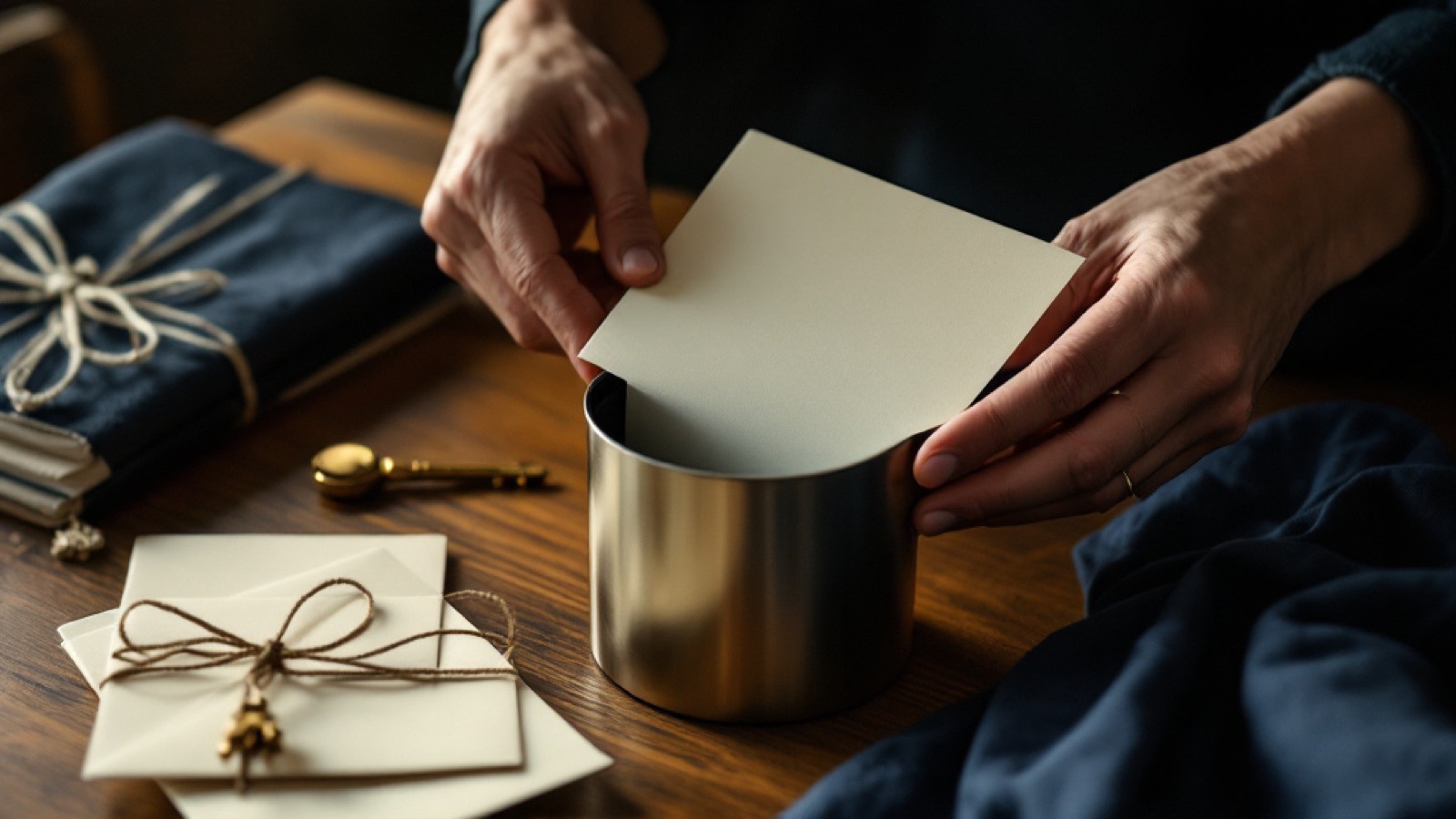
To make a time capsule that actually gets opened, use an airtight container, pack only materials that survive the years, and write the opening date on the outside. The step that matters most happens outside the box: several people need to know where it is and when to open it, because most time capsules are not ruined, they are forgotten.
Why so many time capsules are never opened
The International Time Capsule Society was founded in 1990 at Oglethorpe University in Atlanta to study and record time capsules. According to a 2015 Wall Street Journal report, the society estimated that 9,000 of the world's 10,000 time capsules had been lost. Its president at the time, historian Paul Hudson, put it simply: people seem to forget about them as soon as they bury them.
Even one of the most famous was forgotten. Oglethorpe's Crypt of Civilization was sealed on May 28, 1940, and is not to be opened until May 28, 8113, according to the university. The same Wall Street Journal report tells how Hudson, then a student, found its stainless steel door in 1970, covered in cobwebs, in a basement hallway full of textbooks and junk.
Oglethorpe's "Most Wanted Time Capsules" list names three causes: theft, secrecy and poor planning. One example: in 1939, MIT engineers placed a brass capsule beneath the 18-ton magnet of a new cyclotron, to be opened in 50 years. Nobody remembered it. Once someone did, the problem was getting it out.
None of those causes has anything to do with the box.
Step 1: Decide who it's for and when it opens
Before buying anything, answer two questions: who will open it, and on what date? A capsule for your daughter's eighteenth birthday, one for yourself in ten years, one for a graduating class to open at its ten-year reunion. Once that is clear, size, place and contents mostly decide themselves.
Shorter horizons work better. At ten or twenty years, whoever keeps the capsule is probably still around. At fifty, the chain of people who must remember it gets long, and every link can break.
Step 2: Choose a container that truly seals
The Library of Congress recommends a tightly closed container that keeps out light, dust, pollutants and water, made of a chemically inert material: uncoated PET, HDPE or PP plastic jars with screw-top lids, aluminum or stainless steel cans with screw-top lids, or acid- and lignin-free card boxes, which only keep out a little water.
The same page points out that time capsules do not have to be buried, and according to The Wall Street Journal, "no burying" is on the society's list of don'ts. If yours will go underground or into a wall anyway, the Canadian Conservation Institute calls stainless steel by far the best modern material for burial, with threaded caps and O-ring seals.
Step 3: Pick a cool, dry, stable spot
The Library of Congress asks for a place at room temperature or cooler, relatively dry (about 35% relative humidity), clean and stable, away from light, radiators and vents. It rules out attics and basements because of leaks and extremes. An interior closet usually beats the garage.
Moisture is the main enemy. The Canadian Conservation Institute describes old tinplate capsules where trapped moisture, together with soldering flux, could cause corrosion and an acidic environment that discolors and can disintegrate paper, leather and textiles. It recommends packing at least one-fifth of the container's volume with dried silica gel.
Step 4: What to put in, and what to leave out
In a closed space, whatever decays drags the rest down with it. The Library of Congress suggests packing each item, or group of similar items, in its own acid-free paper envelope or uncoated PET bag. The National Archives adds that success depends on the container, the seal, the environment inside, how the items interact and the microorganisms that can grow.
What lasts
- Letters handwritten or printed in carbon-based ink on good acid-free paper.
- Well-processed black-and-white photographs.
- Glass, ceramics, stone, non-corroding metals and natural-fiber textiles.
What decays, or damages everything else
- Food, plants and anything living, which the Library of Congress says to leave out.
- Ordinary paper and photos that are not archival quality. The Canadian Conservation Institute warns that mass-produced paper is acidic and, sealed in, its acidic fumes have nowhere to go. Put in a copy of the photo you love and keep the original at home.
- Batteries, which the institute says to remove from any device you include.
- Audio and video tapes, which it says deteriorate badly unless rewound periodically.
The trouble with USB drives and discs
The Library of Congress puts it plainly: analog items are not machine-dependent, but digital items are. If you include something digital, include the machine that reads it and instructions too. The Canadian Conservation Institute agrees: a compact disc only if a player goes in with it.
The builders of the Crypt of Civilization knew this in 1940. According to Oglethorpe, they left projectors and readers, a windmill-driven generator in case there is no electricity in 8113, a magnifier to read the microfilm by hand, and a machine to teach English.
For your own files, the Library of Congress recommends checking digital photos at least once a year and copying them to new media every five years. A sealed box allows neither. Print the photos, write the letters, and if a USB drive goes in, make it an extra, never the only copy.
Step 5: Label it, list it, and tell people
This is the step that decides whether your time capsule gets opened.
- Write on the outside "Do not open before" and the date, who it's for and who made it. The Library of Congress also suggests marking which side is up.
- Put a list of the contents inside, with why each item was chosen, and keep a copy with your important papers.
- Tell two or three people, ideally of different ages: where it is, when it opens and who should be there.
- Mark the location and register it. The International Time Capsule Society recommends both and keeps a registry.
- Think about who will open it. Leave a short note on top explaining what it is.
A group version: graduation and family time capsules
A graduation time capsule opened at the ten-year reunion is a classic, and the International Time Capsule Society suggests involving the whole class and holding a sealing ceremony. Each student writes a letter to their future self and seals it in an envelope with their name. Two people keep the capsule: someone from the school and someone from the class.
The risk is losing touch. In ten years, many emails and phone numbers will have changed, so name the person who will call the reunion from day one.
Families can do the same: seal a capsule at a grandparent's birthday and open it at a grandchild's, with one letter from each generation.
Time capsule ideas by who it's for
- For a young child or grandchild: a letter about their life at this age, one of their drawings, their height marked on paper, their favorite words.
- For yourself: what worries you today and what you hope for, a grocery receipt, a printed photo of your street.
- For a couple: how you met, told by each of you separately, and where you think you'll be in ten years.
- For a class: a printed group photo, the schedule, the nicknames, each student's prediction about the others.
- For a family: handwritten recipes, the family tree, a letter from the oldest to the youngest.
The digital time capsule: storage is easy, delivery is not
Storing files costs almost nothing now. Getting them delivered is the hard part. A cloud folder is not a time capsule if nobody knows it exists: accounts close, email addresses change, and passwords disappear with the person who knew them.
For the digital version, the International Time Capsule Society suggests organizing the files, keeping copies in different places and setting an opening date. One piece is missing: something that delivers it. A useful digital or video time capsule has to:
- Arrive on its own on the chosen date, without relying on you to remember.
- Reach one named person, without making them create an account or remember a password.
- Have a plan if you are no longer here, with people who can confirm it.
Making a video time capsule with Rememver
Rememver is built for that part. Record a private video message and choose when it arrives: on a date you pick, or after your passing, once the people you trust confirm it. You can add a written message to the video. Trustees never see the video or the message. The recipient gets a link and a 12-character code by email, and they don't need an account to view it. Credits never expire.
Know the limits. Each capsule holds one video and a written message, not photos or documents. It is delivered by email to the address you give, so keep that address current. And for delivery after your passing, it depends on your trusted people responding.
The two kinds work together. The box keeps what you can touch, like someone's handwriting or a child's drawing. The video keeps the voice. Make whichever one comes first, and tell someone it exists.
Sources
- Trying to Capture a Moment, Many Lose Track of Time (The Wall Street Journal, August 2, 2015, reprinted by Georgia Perimeter College), The Wall Street Journal / Georgia Perimeter College Newsroom
- Crypt of Civilization, Oglethorpe University
- About the International Time Capsule Society, International Time Capsule Society
- Most Wanted Time Capsules, Oglethorpe University, Crypt of Civilization
- How to make a time capsule, International Time Capsule Society
- Making a Time Capsule, Library of Congress, Preservation
- Time Capsules (CCI Notes 1/6), Canadian Conservation Institute
- How do I Preserve Documents in a Time Capsule?, U.S. National Archives and Records Administration
- Keeping Personal Digital Photographs, Library of Congress, Digital Preservation
Frequently asked questions
What do you put in a time capsule?
The items that last best are handwritten or printed letters on acid-free paper, well-processed black-and-white photographs, glass, ceramics and metals that do not corrode. The Library of Congress advises leaving out food and plants, wrapping each item separately, and adding a list of the contents that explains why each one was included. Personal items work best: a letter, a drawing, a printed photo, a recipe.
Do you have to bury a time capsule?
No. The Library of Congress says time capsules do not have to be buried, and the International Time Capsule Society lists burying among its don'ts, according to The Wall Street Journal. A cool, dry indoor spot, such as an interior closet, is safer than the ground, an attic or a basement. Buried capsules are also the easiest to forget.
Can I put a USB drive in a time capsule?
You can, but it should never be the only copy. The Library of Congress notes that digital items depend on a machine to be read and recommends including that machine and instructions. The Canadian Conservation Institute advises including a compact disc only if a player goes in too. Print the photos and letters that matter, and treat the drive as an extra.
How long should a time capsule stay closed?
There is no rule, but shorter horizons are more likely to work. At ten or twenty years, the person keeping the capsule is probably still nearby and remembers where it is. At fifty years, the chain of people who must remember it grows longer. Pick a date tied to a real event, such as an eighteenth birthday or a ten-year class reunion.
What is a digital time capsule?
A digital time capsule stores messages, videos or files so a specific person receives them on a future date. Its weak point is delivery, not storage: accounts close, email addresses change, and often nobody knows the capsule exists. A good digital time capsule arrives on its own on the chosen date, reaches one named person, and does not ask them to remember a password.